Analysing Price Trends in the Euro vs US Dollar Exchange Rate
The foreign exchange market, often referred to as Forex, is the largest and most liquid financial market in the world. Among the myriad of currency pairs traded daily, the Euro against the US Dollar, commonly abbreviated as EUR/USD, stands out as the most actively monitored. This currency pair not only reflects the economic health of two major global economies but also provides vital insight for investors, traders, and policymakers.
Understanding the factors that influence its movements and the methods to analyse its price trends is essential for anyone looking to navigate this complex market.
Understanding the EUR/USD Currency Pair
At its core, the EUR/USD exchange rate indicates how many US Dollars are required to purchase one Euro. Movements in this rate are influenced by a combination of economic data, geopolitical events, and market sentiment. Unlike other financial instruments, the Forex market operates 24 hours a day, providing continuous opportunities but also requiring constant attention to global developments.
The Euro Dollar Forex market is sensitive to interest rate differentials between the European Central Bank (ECB) and the Federal Reserve (Fed). When the ECB raises interest rates, the Euro tends to strengthen against the Dollar, attracting capital flows seeking higher returns. Conversely, if the Fed tightens its monetary policy, the Dollar may appreciate relative to the Euro. However, these reactions are not always immediate or linear, as traders also factor in expectations, inflation trends, and broader economic indicators.
Key Drivers of Price Trends
Price trends in the EUR/USD are rarely random; they are the product of multiple interacting factors. Economic indicators play a crucial role in shaping market perceptions. Reports on GDP growth, employment levels, manufacturing output, and consumer confidence can all sway investor sentiment and lead to substantial currency movements. For instance, stronger-than-expected US employment data might boost the Dollar, while signs of sluggish economic growth in the Eurozone could weigh on the Euro.
Geopolitical events also exert a notable influence. Political instability, trade negotiations, and international conflicts can create periods of heightened volatility. Traders often respond to these developments by adjusting their positions in anticipation of changes in risk appetite. This dynamic underscores the importance of keeping abreast of global news when analysing price trends in the EUR/USD pair.
Market psychology further contributes to trend formation. Investor sentiment, often shaped by technical signals and media coverage, can create self-reinforcing movements. For example, if traders perceive a pattern of consistent Euro strength, more participants may enter long positions on the Euro, sustaining the upward trend. Conversely, pessimism about economic conditions can accelerate a downward movement. Understanding these psychological drivers can help traders interpret trends beyond the fundamental data.
Technical Analysis and Trend Identification
While fundamental factors provide the rationale for currency movements, technical analysis is an indispensable tool for identifying trends and timing entries or exits. Technical analysts study historical price patterns, trading volumes, and other market data to forecast future movements. Common tools include moving averages, support and resistance levels, trend lines, and momentum indicators.
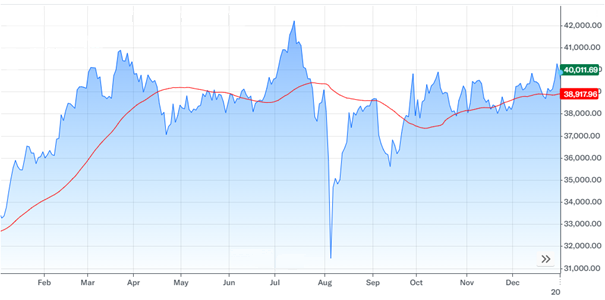
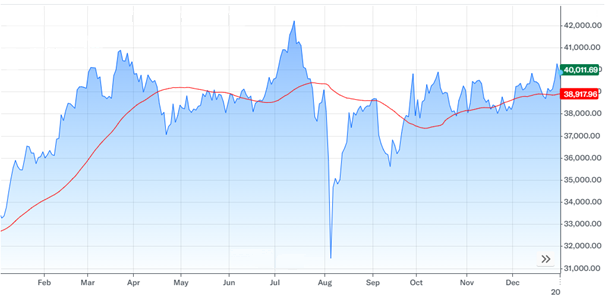
Moving averages, for instance, smooth out short-term price fluctuations and help reveal the underlying direction of the market. When the EUR/USD price consistently trades above a moving average, it may indicate a bullish trend, whereas trading below suggests a bearish trend. Support and resistance levels provide insight into potential turning points, where the market may pause or reverse direction. Recognising these levels allows traders to make informed decisions and manage risk effectively.
Trend lines and channels are also widely used. By connecting successive highs or lows, traders can visualise the prevailing trend and anticipate potential breakouts. Momentum indicators, such as the Relative Strength Index (RSI) or Moving Average Convergence Divergence (MACD), offer additional confirmation by highlighting overbought or oversold conditions. Combining multiple technical tools can provide a more comprehensive perspective, reducing the reliance on a single signal.
The Role of Market Sentiment and News
In addition to technical and fundamental analysis, monitoring market sentiment is crucial. Sentiment indicators, such as positioning data and volatility indices, reveal how traders are collectively viewing the market. Extreme levels of optimism or pessimism often precede reversals, providing strategic opportunities for those who can interpret them correctly.
News events, particularly those related to monetary policy, trade agreements, and economic releases, can trigger sharp movements in the EUR/USD pair. High-impact announcements, such as interest rate decisions or employment reports, frequently lead to increased volatility and rapid price changes. Traders who integrate news analysis into their strategy can anticipate potential reactions and position themselves accordingly. This approach requires discipline and the ability to separate noise from genuinely market-moving information.
Conclusion
The EUR/USD exchange rate offers a dynamic window into the health of the Eurozone and US economies, reflecting the interplay of economic fundamentals, geopolitical events, and market psychology. Analysing its price trends requires a holistic approach that integrates fundamental research, technical analysis, and real-time news monitoring.
Whether for short-term trading or long-term investment, recognising patterns and understanding the drivers of price movement is essential for making informed decisions. Engaging with resources like Euro Dollar Forex provides valuable market insights and tools to navigate this highly active currency pair effectively. By adopting a disciplined strategy and maintaining awareness of global developments, participants can approach the EUR/USD market with confidence and strategic clarity.